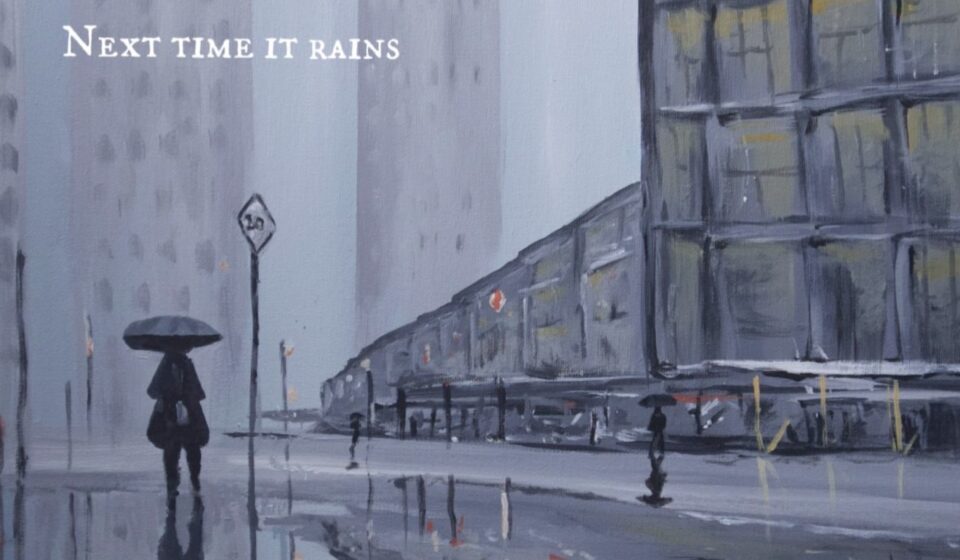

Daniel Eagle & The Uncommon’s “Next Time It Rains” opens with the feeling of a solemn lament, using changing weather as a reflection of the darker moments that come with shifting seasons. There is a distinctly autumnal atmosphere running through the song, giving its subject a sense of melancholy. Rather than remaining within that subdued mood, the track gradually develops into a more powerful alternative rock ballad, balancing its haunting qualities with a growing sense of intensity.
Eagle’s soulful vocal performance plays an important role in shaping the song’s character. His voice carries a noticeable gravelly texture, bringing raw emotion to the delivery and complementing the reflective nature of the material. That vocal quality gives the song a personal presence, particularly as the arrangement begins to build. His performance does not lose the restraint established at the beginning, allowing the increasing intensity to feel connected to the mood that first introduces the track.
Traditional rock instrumentation provides the foundation, while resonant piano and muted trumpet bring additional depth to the arrangement. These elements give “Next Time It Rains” a distinctive atmosphere, adding colour without taking away from the central vocal performance. The piano’s presence and the muted trumpet’s contribution help shape the song’s more reflective passages, while the overall arrangement gradually gains momentum. This combination of instrumentation gives the track a sound that moves between atmospheric pop and alternative rock.

A particularly striking moment arrives as the song builds towards its final chorus, where the rising intensity brings a stronger emotional weight to the performance. That progression gives the closing section a sense of arrival, contrasting with the solemn mood heard at the beginning. “Next Time It Rains” succeeds in bringing together soulful vocals, traditional rock instrumentation and atmospheric touches, creating a song that captures the darker side of seasonal change without losing its melodic character.